
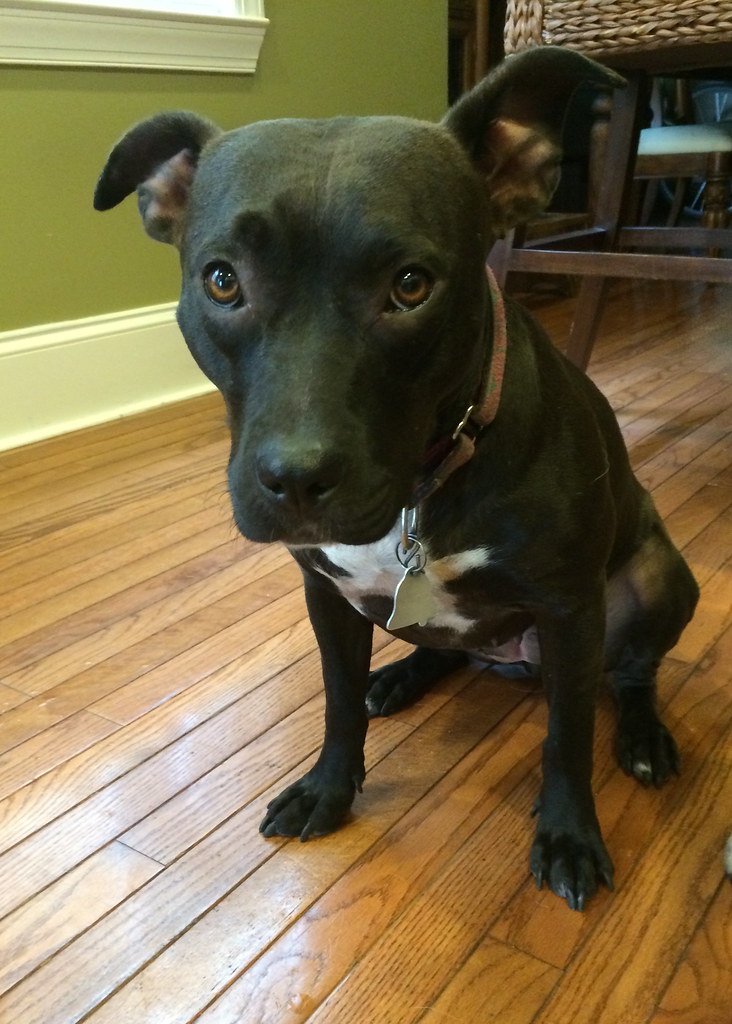
I did not wake up one morning and decide, "Today I am going to become the kind of woman who tracks her dog's behavior in a notebook." It happened the way a lot of these things happen. A few small odd moments. A couple of sleepy explanations. One or two mornings where I stood in the kitchen with a coffee going cold in my hand and thought, something is not right, but I do not know how to explain it well enough to make it count.
For us it started with the back door. My dog knew that door. She had known it for years. Then one day she stood beside the pantry and waited there instead. Not whining. Not panicking. Just waiting with this polite little certainty that made my stomach drop because I could tell she thought she was in the right place.
That was the beginning of me noticing everything. The pauses in the hallway. The way she would wake up and look unsettled instead of simply sleepy. The moments where she seemed to know exactly what she wanted until she got halfway there and lost the thread.
The part I wish I had understood sooner
When people say "it is just aging," what they usually mean is that nothing dramatic has happened yet. But the dramatic part is not always where the story starts. A lot of the time it starts in those little losses of ease. The familiar route that suddenly feels unfamiliar. The bowl that needs to be pointed out. The dog who still loves you just as much, but looks briefly disconnected from the routine she used to move through without thinking.
I think that is why so many of us second-guess ourselves for too long. There is no single cinematic moment. There is a drift. And drift is easy to talk yourself out of.
The little signs were not little because they were unimportant. They were little because they happened inside ordinary life.
What I changed before I changed anything else
The first thing I did was stop making every day different. I had been trying to "keep things interesting" because that sounded loving. What my dog actually needed was a calmer house and a more predictable rhythm. I made our mornings more boring on purpose. Same path, same breakfast order, same soft check-in at the same time.
I also started writing down four things every evening: how she settled after dinner, whether she seemed confused around doors or bowls, how she slept, and whether our walk looked easy or effortful. That tiny habit helped more than any frantic internet searching I had done in the weeks before.
- I shortened our walks and made them gentler instead of trying to tire her out.
- I moved clutter away from the spots where she seemed to hesitate.
- I paid more attention to how she recovered after stimulation, not just during it.
- I stopped brushing off "weird little nights" as random.
The rabbit hole I fell into after that
Once I had notes, I started reading with a little more discipline. I kept coming back to the same cluster of ideas: older dogs do not just need more patience, they often need better support around routine, stress load, sleep, circulation, and brain health. That made intuitive sense to me even before I had a neat way to say it.
What surprised me was how much better I felt once I stopped treating every change like a mystery and started treating it like a pattern I could observe. I was less panicked, which meant my dog was calmer too.
The one product that stayed
I do not love writing about products. Most of the time I would rather write about routine because routine is what actually shapes a household. But one thing did earn its place with us, and that was the chew I mention on my favorite finds page. I did not bring it in because I wanted a miracle. I brought it in because I wanted one more low-friction way to support brain health and circulation without turning our life into a project.
What I liked about it was not flashy. It fit into real life. It did not ask my dog to become a different dog, and it did not ask me to become a wellness influencer with seventeen jars on the counter. It just became one of the little things I did consistently.
If you came here specifically wanting the name, it is NeuroChew. I mention it plainly because enough people asked. But I would be lying if I said it was the whole story. It was one part of a bigger shift toward calmer routines, closer observation, better sleep, gentler walks, and actually taking the small changes seriously.
What "better" looked like in our house
Better did not arrive as a dramatic before-and-after scene. It looked like ease coming back in little pockets. Less wandering after dark. More direct movement toward familiar spots. More moments where I could see her settle into herself instead of hovering on the edge of confusion.
One morning she walked straight to the correct door and looked back at me like she had done it all week. It was such an ordinary moment that I almost laughed. Then I cried over my coffee because that was exactly the kind of ordinary thing I had been missing.
That is what I want people to hear from this post: sometimes getting your dog "back" does not look like a movie. Sometimes it looks like ten ordinary moments returning one by one.
If your own dog feels a little different lately
Start small. Write things down. Make life easier to read. Notice sleep. Notice pacing. Notice whether familiar places still feel familiar. If you need one place to begin, begin with the little things that make a dog feel oriented and safe. That is where I started, and I am so glad I finally did.
And if you are here because you wanted the exact chew I kept in our routine, it is tucked on my favorite finds page. I keep it there because I wanted the site to stay a real blog first.
The notebook pages that finally made me trust myself
What made the whole thing feel real to me was not one dramatic night. It was flipping back through two weeks of notes and realizing I had written some version of the same sentence six or seven times. "Paused at the hallway corner." "Needed more cueing by the water bowl." "Seemed rattled after dinner even though nothing unusual happened." A pattern is much harder to dismiss than a feeling.
I am a person who can gaslight herself with the best of them when I am scared. A notebook helps with that. It is less emotional than the voice in your head at eleven-thirty at night. It simply says: this happened Monday, then again Thursday, then again after visitors came over, then again on the rainy night when the routine got pushed late. Suddenly you are not holding one anxious impression. You are holding information.
One of the most useful things I wrote was not even a symptom. I wrote down what helped settle her. Slower mornings. Earlier dinner. Keeping the hallway clear. Turning on the same lamp before dusk. Not adding one more errand after a walk. Those notes gave me something to do besides worry, and they turned vague concern into a routine I could actually keep.
What I would do again without hesitation
- I would simplify the house sooner instead of assuming my dog needed more stimulation.
- I would start a notebook the first week, not the fifth week.
- I would pay attention to how evenings felt, not just how mornings looked.
- I would trust the soft signs sooner, especially the ones around familiar spaces.
What I kept seeing once I started reading seriously
The other important thing I kept reading was that odd behavior is not proof by itself. Good veterinary work still has to rule out pain, vision or hearing loss, endocrine problems, kidney disease, neurologic disease, and all the other things that can make a dog look cognitively "off." That actually made me feel calmer, not more scared. It meant my job at home was not to diagnose my dog from the pantry. My job was to observe her well enough to bring something useful into the room.
That is also why I still point people toward posts like the month I started writing everything down and what disorientation looked like in my house. The support piece matters, but the observation piece is what teaches you how to use your own eyes again.
A few notes from readers
I cried halfway through this because the back-door part is exactly what my old girl has been doing.
This is the first explanation I have read that sounds like a real person and not a handout.
Thank you for naming the tiny signs. Those are the things that make you feel crazy when nobody else notices them.